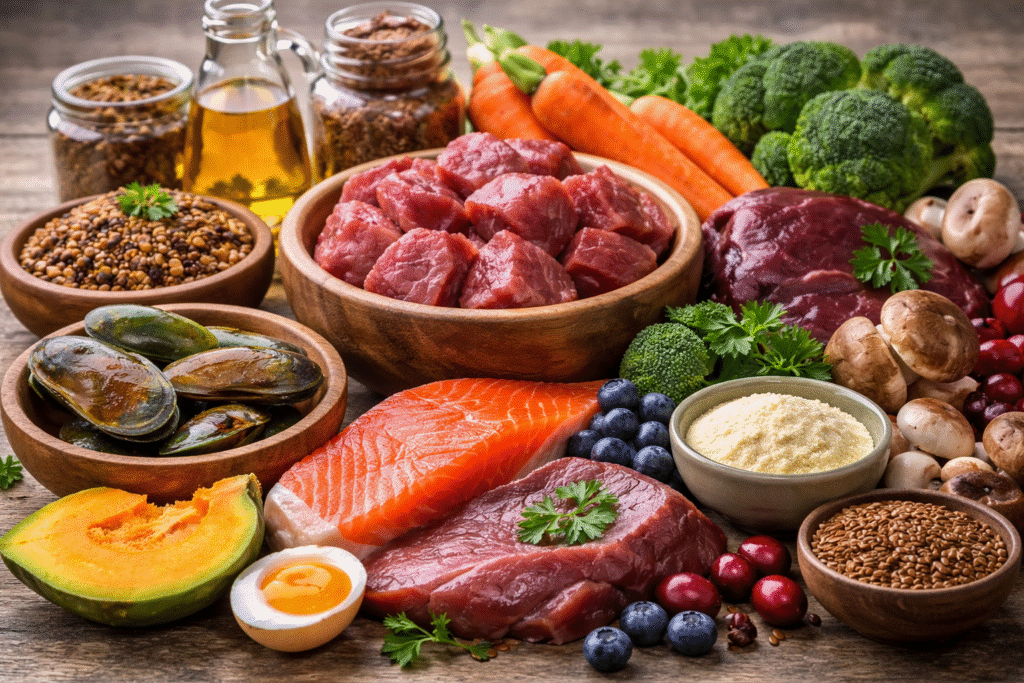
Research-Backed Ingredient Insights
As dog owners, we all want our companions to live long, vibrant lives. But walking down the pet food aisle can feel overwhelming. With thousands of colorful bags and bold claims, how do you know what’s actually inside?
Foundational nutrition isn’t a fad diet – it’s about ensuring your dog gets the biological building blocks they need to thrive, not just survive. This guide will cut through the marketing noise, explain the key nutrients, and show you exactly what to look for (and what to avoid) when choosing your dog’s food.
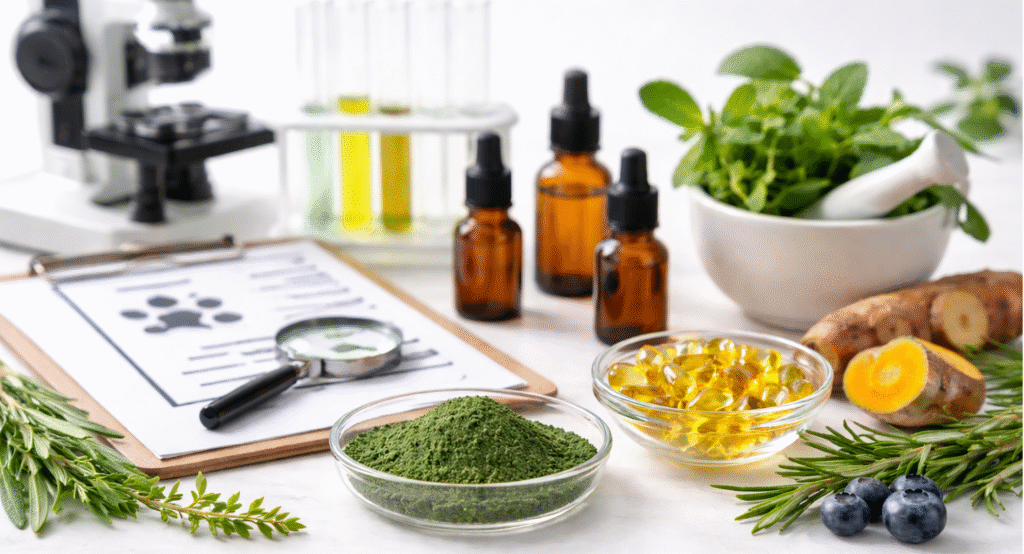
🧱The Core 4: Key Nutrients Your Dog Needs
Just like humans, dogs require a balance of macronutrients and micronutrients. If a food is missing these foundational elements, your dog’s health may eventually suffer. According to AAFCO (Association of American Feed Control Officials), the six essential nutrients for dogs are water, carbohydrates (including fiber), vitamins, minerals, fat, and protein. Here we focus on four core groups that often distinguish high-quality dog foods:
🥩Protein (The Builder)
Role: Essential for muscle growth, tissue repair, and immune system function.
The Standard: Dogs are facultative carnivores. They thrive on animal-based protein because it contains the complete profile of amino acids they need.
Target: Look for foods where a specific animal protein tops the ingredient list. For example, “Chicken” or “Chicken Meal” (which is simply dehydrated chicken meat) as the first ingredient is a good sign. Avoid generic labels like “Meat” or “Meat Meal” (more on that later).
🛢️Healthy Fats (The Fuel)
Role: The primary energy source for dogs. Fats also support brain function and are vital for a shiny coat and healthy skin.
The Standard: A balance of Omega-3 (anti-inflammatory) and Omega-6 (pro-inflammatory but necessary for immunity) is crucial. Most commercial foods are too high in Omega-6.
Target: Look for added sources like fish oil, salmon oil, or flaxseed instead of ‘animal fat’. AAFCO’s guidelines now recognize Omega-3s as essential for dogs and recommend not exceeding a 30:1 ratio of Omega-6 to Omega-3
🌾Carbohydrates & Fiber (The Digestive Aid)
Role: While dogs don’t essentially need carbs to survive, good sources provide quick energy and fiber for gut health.
The Standard: Complex carbohydrates are superior to simple sugars.
Target: Look for Complex carbs: (sweet potatoes, pumpkin, oats, or brown rice.) They digest more slowly, avoiding blood sugar spikes, and they often come with fiber and nutrientsSimple carbs (like sugar, white flour, corn syrup) add calories with little nutritional benefit and can contribute to obesity or diabetes in the long run. carbs should not be the bulk of a dog’s diet; protein and fat are more important
⚙️Micronutrients (The Regulators)
Role: Vitamins (A, D, E, K, B-complex) and minerals (Calcium, Phosphorus) regulate everything from vision to bone density.
The Standard: These should ideally come from whole food sources (like organ meats or veggies) rather than just a synthetic “vitamin pack” added at the end.
Target: Look for ingredient list contains things like organ meats or leafy greens. Many commercial kibbles are baked at high temperatures then sprayed with a synthetic “vitamin pack” to meet minimum standards. Ensure the food has an AAFCO nutritional adequacy statement on the label indicating it is “complete and balanced” for your dog’s life stage.
✅What to Look For: The Green Flags
🥩 Named Animal Protein First
The first ingredient should be a specific animal, not a generic term.
🥕 Whole, Recognizable Ingredients
Carrots, pumpkin, spinach, blueberries — real food matters.
🛢️ Named Fat Sources
“Chicken Fat” or “Salmon Oil” is far better than “animal fat.”
📜 Complete & Balanced
AAFCO-approved for your dog’s life stage.
Pro Tip: Look for the Salt Divider. In a dog food label, salt is usually present at about 1%. Any ingredient listed after salt is present in tiny amounts. If “Blueberries” or “Kale” are listed after salt, they are there for marketing, not nutrition.
🚫What to Avoid: The “Red Flags”
Some ingredients look harmless — or even impressive — but offer little benefit and may negatively impact long-term health. Here’s how to spot them and what to choose instead.
❓ Generic “Meat” or “Poultry” Meals
Why it matters
Terms like “animal digest,” “meat meal,” or “poultry by-product” don’t specify the animal source. This lack of transparency often signals inconsistent quality and lower biological value.
Better alternative
- Named animal sources such as:
- Chicken meal
- Salmon
- Beef liver
Clear sourcing matters for both nutrition and digestibility.
🪄 The “Split Ingredient” Trick
Why it matters
Manufacturers may list a quality protein first, then “split” carbohydrates into multiple forms (pea flour, pea protein, whole peas). Combined, these cheaper ingredients can outweigh the meat — even if meat appears first.
Better alternative
- Whole, named protein sources listed first
- One clear carbohydrate source (not multiple variations of the same ingredient)
⚠️ Artificial Preservatives
Why it matters
Preservatives like BHA, BHT, and ethoxyquin extend shelf life but have been linked to potential long-term health concerns, including organ stress.
Better alternative
- Natural preservatives such as:
- Mixed tocopherols (Vitamin E)
- Rosemary extract
🎨 Artificial Colors & Flavors
Why it matters
Dogs don’t care about color. These additives exist solely for human appeal and may trigger allergies, digestive upset, or hyperactivity.
Better alternative
- No added colors or flavors
- Food that appears naturally uniform in color
🍬 Sugars & Sweeteners
Why it matters
Ingredients like corn syrup, sucrose, or propylene glycol are used to make low-quality food more palatable. They contribute to obesity, diabetes, and dental disease.
Better alternative
- No added sugars or sweeteners
- Palatability driven by real animal ingredients
🧠 Quick Rule of Thumb
If an ingredient:
- Isn’t clearly named
- Exists mainly for appearance or shelf life
- Appears after salt in tiny amounts
…it’s likely there for marketing — not your dog’s health.
Many commercial foods use fillers to bulk up the product and lower costs. These ingredients often offer little nutritional value or can actively harm gut health.
🍖A Note on Treats
Treats are often the biggest culprit for “junk food” ingredients.
- 👍The Rule of Thumb: A treat should ideally have one ingredient (e.g., Freeze-dried beef liver, dehydrated sweet potato, or salmon skin).
- ❌Avoid: “Chew sticks” that look like plastic or have 20+ ingredients.
Remember, treats should make up no more than about 10% of your dog’s daily calories.
📋Summary Checklist: Shopping for Dog Food
When evaluating a dog food, run through this quick checklist of foundational criteria. If you can answer “Yes” to most of these questions, you’ve likely found a winner:
- First Ingredient: Is the first ingredient a specific animal meat (not a by-product or vague “meat”)?
- Fat Source: Is the fat source clearly named (e.g. “Chicken Fat” or “Sunflower Oil” rather than generic “animal fat”)?
- No Mystery Meats: Are there no generic meat meals or by-products listed? (Every animal protein should be identified by species.)
- No Artificials: Is the recipe free of artificial preservatives (BHA, BHT, ethoxyquin), artificial colors, and added sugars?