Signs Your Dog’s Gut Health Is Off (And What to Do First)
1 in every 3 Dogs has Gut Problems. Digestive issues don’t always start with obvious diarrhea.
In many dogs, early gut imbalance shows up subtly — through stool changes, behavior shifts, or recurring sensitivities that are easy to overlook.
This guide helps you recognize early warning signs of gut imbalance, understand what they usually mean, and decide when simple adjustments are enough versus when professional care is needed.
🐾 Why Gut Issues Often Go Unnoticed
Dogs are good at adapting.
Mild digestive discomfort doesn’t always stop them from eating, playing, or acting “normal,” which is why gut issues often progress quietly.
Early signs are often:
- inconsistent
- mild
- dismissed as “just a bad day”
Catching these signals early makes gut health much easier to support.
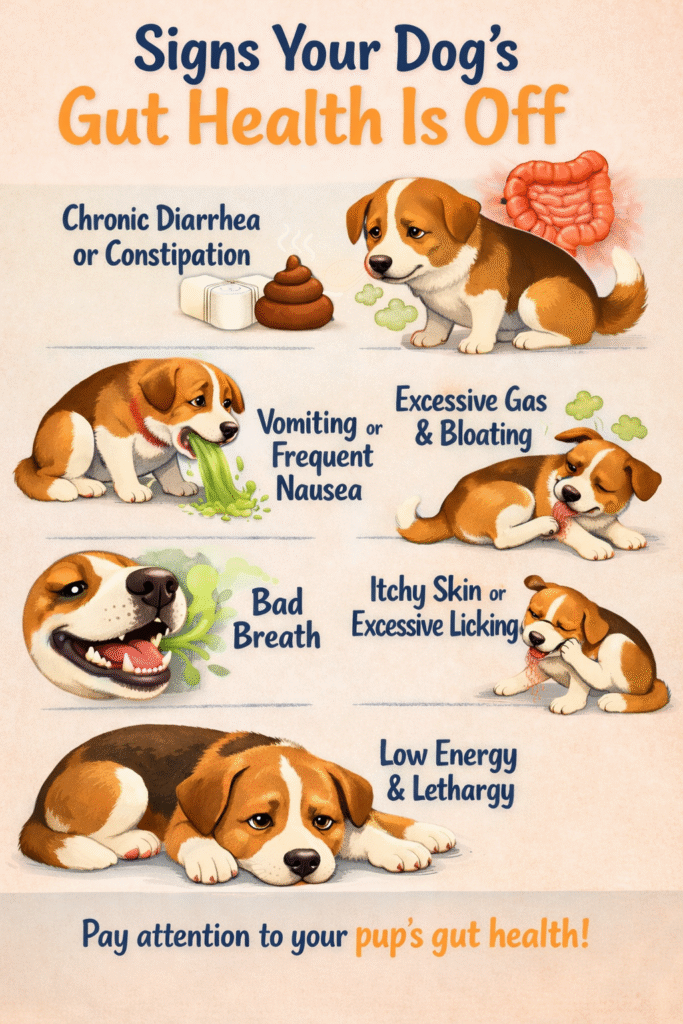
💩 Stool Changes That Signal Gut Imbalance
Stool quality is one of the clearest windows into gut health.
Common changes include:
- Soft but formed stools
- Stool shape that varies day to day
- Occasional mucus coating
- Stool that looks normal but smells unusually strong
- Increased frequency without diarrhea
👉 These signs often point to digestive imbalance, not infection.
🧠 Behavior Changes Linked to the Gut
The gut and nervous system are closely connected.
When digestion is off, dogs may show:
- Restlessness or pacing
- Mild anxiety or clinginess
- Reduced interest in food
- Increased grass eating
- Licking lips or swallowing frequently
These behaviors are often overlooked but can be digestion-related.
🧴 Skin & Coat Clues That Start in the Gut
Not all skin issues begin at the skin.
Gut imbalance can contribute to:
- Dull or dry coat
- Excessive shedding
- Recurrent itching without fleas
- Paw licking or ear irritation
When digestion and nutrient absorption improve, skin and coat health often improve as well.
⏰ When Timing Matters (Patterns to Notice)
Gut-related issues often follow patterns, such as:
- Symptoms appearing after treats or table scraps
- Upset following travel, boarding, or routine changes
- Loose stool after stressful events
- Digestive issues during seasonal transitions
Patterns are more important than isolated incidents.
⚠️ When These Signs Need Veterinary Attention
While many gut issues are manageable, seek veterinary advice if you notice:
- Symptoms worsening over time
- Weight loss
- Persistent vomiting
- Blood in stool
- Lethargy
- Puppies or senior dogs showing rapid changes
This guide focuses on early and mild signs, not emergencies.
🌿 What to Do First (Before Supplements)
If you notice early gut imbalance, start here:
1️⃣ Stabilize the Diet
- Avoid frequent food changes
- Pause new treats
- Stick to one consistent feeding routine
2️⃣ Simplify Ingredients
- Fewer ingredients = easier digestion
- Avoid heavily processed or greasy add-ons
3️⃣ Support Routine & Calm
- Regular feeding times
- Predictable walks
- Reduced stress where possible
Many mild gut issues improve within days with consistency alone.
🦠 When Probiotics May Help
Probiotics can be helpful if:
- stool is consistently soft
- stress is ongoing
- antibiotics were recently used
- the dog is aging
Choose:
- dog-specific strains
- clear labeling
- moderate CFU (measures how many live bacteria are in a supplement) counts
Probiotics support balance — they don’t override poor diet or routine.
🚫 Common Mistakes That Delay Improvement
❌ Switching foods repeatedly
❌ Adding multiple supplements at once
❌ Treating every symptom separately
❌ Expecting instant results
❌ Ignoring stress or routine changes
Gut health improves best with simple, steady adjustments.
🧩 How This Fits Into Long-Term Gut Health
Early signs of imbalance are your dog’s way of asking for support — not signaling failure.
When addressed early:
- digestion stabilizes faster
- fewer supplements are needed
- chronic issues are less likely to develop
This approach works best when paired with a solid understanding of digestion fundamentals.
👉 If you haven’t yet, start with The Dog Gut Health Guide for a full overview of digestion, causes, and long-term support.
💡 Barkcoin Pets Expert Tip
Most gut issues improve not from doing more, but from doing less — fewer changes, fewer ingredients, and more consistency.
Gut health is built through patience, not quick fixes.
📌 Quick Takeaway Checklist
✔ Watch stool consistency patterns
✔ Notice behavior and appetite changes
✔ Simplify diet before adding supplements
✔ Support routine and calm
✔ Use probiotics thoughtfully
✔ Act early, not urgently