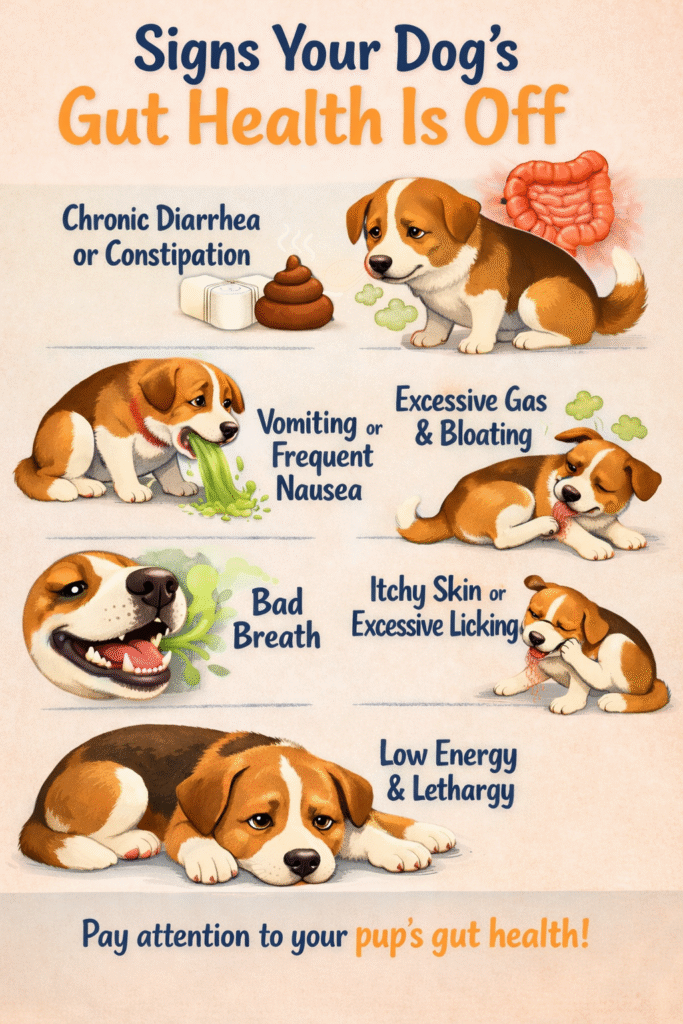
🦠 The Dog Gut Health Guide
Digestion, Diarrhea & Sensitive Stomachs (Explained Simply)
Digestive issues are one of the most common concerns dog parents face. Occasional loose stools, gas, or stomach upset can be worrying — especially when it seems to come out of nowhere.
The good news?
Most digestive issues are manageable, non-emergency, and often linked to diet, routine, or gut balance — not serious disease.
This guide will help you understand:
- Why digestion issues happen
- When to monitor vs when to act
- How to support your dog’s gut naturally
- What actually helps (and what’s just marketing)
🧠 Why Gut Health Matters So Much
Your dog’s digestive system does more than process food.
A healthy gut supports:
- Nutrient absorption
- Immune function (over 70% of the immune system lives in the gut)
- Skin & coat health
- Energy levels
- Stool quality and regularity
When the gut is out of balance, symptoms often appear everywhere, not just in the stool.
💩 Common Digestive Symptoms (And What They Usually Mean)
Occasional digestive upset is normal — especially if symptoms are mild and short-lived.
Common signs:
- Soft stool or occasional diarrhea
- Gas or bloating
- Gurgling stomach sounds
- Inconsistent stool shape
- Mild constipation
- Decreased appetite for a day
👉 These are often linked to dietary changes, stress, or gut imbalance, not illness.
⚠️ When Digestive Issues Need Veterinary Attention
Seek veterinary care if you notice:
- Persistent diarrhea lasting more than 48–72 hours
- Blood or mucus in stool
- Vomiting combined with diarrhea
- Sudden weight loss
- Lethargy or dehydration
- Puppies or senior dogs with severe symptoms
This guide focuses on non-emergency, chronic or occasional issues.
🔍 The Most Common Causes of Digestive Upset
1️⃣ Sudden Diet Changes
Dogs have sensitive digestive systems. Switching food too quickly can disrupt gut bacteria.
Solution:
Transition foods over 7–10 days, slowly increasing the new food.
2️⃣ Low-Quality or Hard-to-Digest Ingredients
Common culprits include:
- Generic meat meals
- Excessive fillers
- Artificial preservatives or dyes
These can irritate the gut lining and reduce nutrient absorption.
3️⃣ Gut Microbiome Imbalance
Your dog’s gut contains trillions of beneficial bacteria. Stress, antibiotics, aging, or poor diet can disrupt this balance.
Symptoms often include:
- Soft stool
- Gas
- Inconsistent digestion
4️⃣ Stress & Routine Disruption
Changes in routine, travel, boarding, or household stress can directly affect digestion.
The gut and nervous system are deeply connected.
🥕 Fiber, Probiotics & Digestive Support (What Actually Helps)
🌾 Fiber: The Gut Regulator
Fiber helps:
- Firm loose stools
- Feed beneficial gut bacteria
- Improve regularity
Helpful sources:
- Pumpkin
- Sweet potato
- Oats
- Psyllium husk (small amounts)
Too much fiber, however, can worsen symptoms — balance matters.
🦠 Probiotics: Supporting Healthy Gut Bacteria
Probiotics may help with:
- Antibiotic recovery
- Stress-related diarrhea
- Age-related digestion changes
Look for:
- Dog-specific strains
- Clear CFU counts
- Transparent labeling
Probiotics are supportive, not instant fixes.
🛢️ Fats & Digestion
Excessive fat — especially poor-quality fat — can trigger loose stools.
Senior dogs or dogs with sensitive stomachs often benefit from:
- Moderate fat levels
- Clean omega-3 sources
- Avoiding greasy treats
🚫 Common Mistakes to Avoid
- ❌ Frequent food switching
- ❌ Overusing supplements without addressing diet
- ❌ Feeding table scraps
- ❌ Ignoring stress or routine changes
- ❌ Assuming “grain-free” always means better
Digestive health improves most when diet, routine, and gut balance are addressed together.
🧓 Digestive Changes in Senior Dogs
As dogs age:
- Digestive enzymes decrease
- Gut bacteria diversity changes
- Sensitivity to ingredients increases
Senior dogs may need:
- More digestible proteins
- Increased fiber (moderately)
- Gentle probiotic support
Loose stools in older dogs are common — and often manageable with small adjustments.
🧩 Putting It All Together: A Calm, Natural Approach
When digestive issues appear, ask:
- Has food changed recently?
- Has routine or stress increased?
- Is ingredient quality appropriate?
- Is the gut microbiome supported?
Small, intentional changes often lead to big improvements.
💡 Barkcoin Pets Expert Tip
Digestive supplements work best after diet quality and feeding routines are addressed.
Supporting the gut is a process — not a quick fix.
Clean ingredients, patience, and consistency matter more than chasing the newest product.
📌 Quick Takeaway Checklist
✔ Stable, high-quality diet
✔ Slow food transitions
✔ Moderate, natural fiber
✔ Gut-supportive probiotics when appropriate
✔ Predictable routines
✔ Fewer treats, better quality